
With "MJ," Michael Jackson becomes the king of jukebox musicals

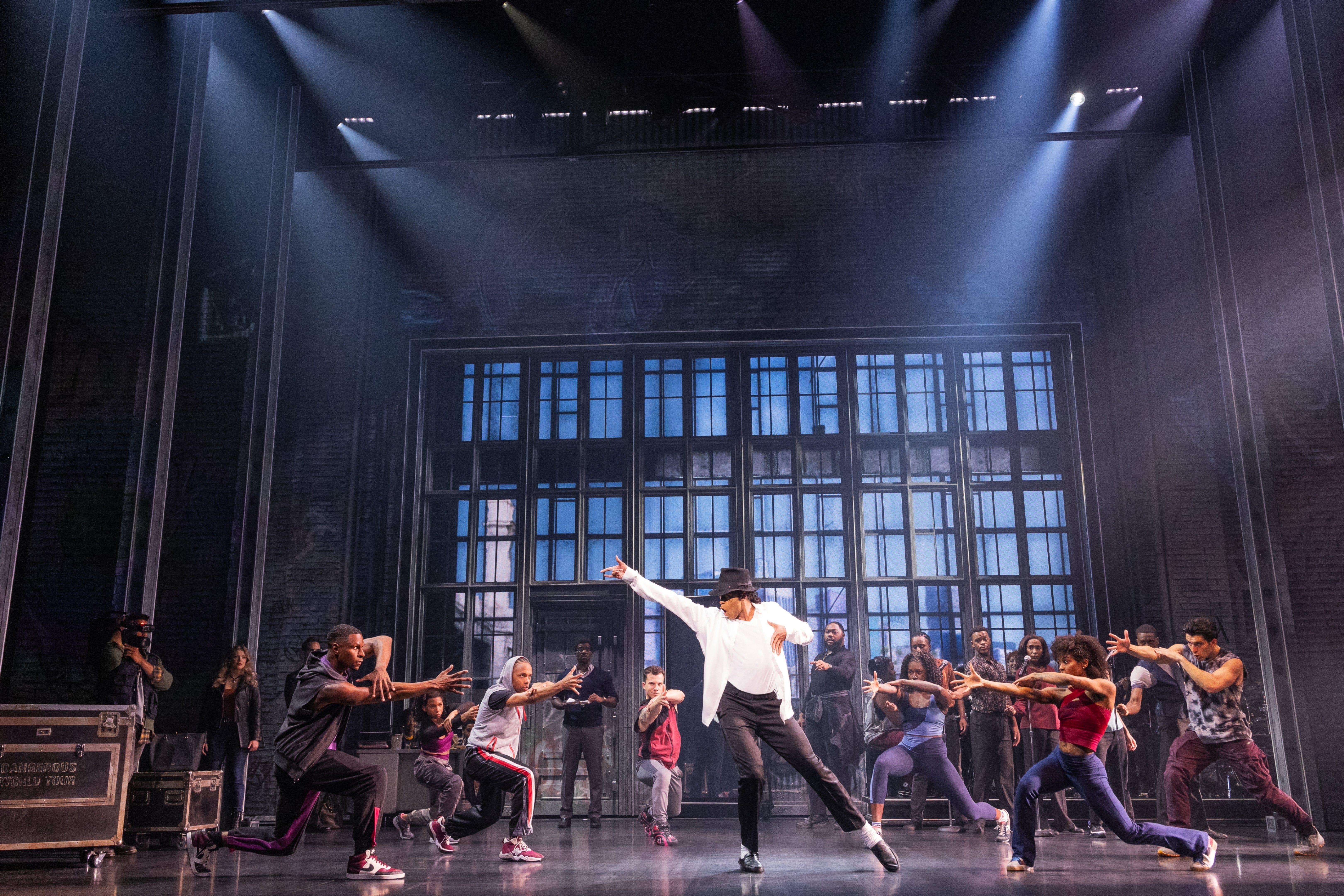
Michael Jackson has long been known as the King of Pop. Now, he can also be considered the king of jukebox musicals.
Set during rehearsals for Jackson’s “Dangerous” tour, with occasional flashbacks to other periods of his career, “MJ” is an electrifying run through Jackson’s extensive catalogue of hits and offers a brief glimpse into the mind of one of the biggest stars of all time – including the weight that comes with that status.
Jackson, channeling his inner John Hammond, continuously tells his team to spare no expense in preparing for the tour, even as they repeatedly express their concerns about the logistics of his increasingly extravagant demands.
It’s all part of Jackson’s perfectionism in his efforts to stay on top – he reminds his team at one point that “quality goes in before the name goes on it.”
“MJ” – the winner of four Tony Awards – lives up to those standards. While many jukebox musicals feel forced, “MJ” is in a league of its own.
The cast – many of whom are making their national tour debuts in “MJ” – was outstanding across the board. You could feel the energy shift in the room from the moment Jordan Markus first took the stage as Jackson. The younger cast members, who portrayed the Jackson 5, were supremely talented in their own right, demonstrating remarkable skill for such a young age.
Choreography by director Christopher Wheeldon makes the show’s team of 22 dancers – including the show’s newest cast member, Michaela Marfori – absolutely captivating.
There are more costumes in “MJ” than Taylor Swift would wear in a weekend on The Eras Tour, and Paul Tazewell’s costume design makes each of Jackson’s eras shine.
While projections often feel like they’re utilized as a cost-cutting measure, Peter Nigroni’s projection designs in “MJ” are used to complement physical set pieces, like when Jackson is fielding questions at a press conference and shards of broken glass display various tabloid style headlines about him, rather than replacing them. Nigroni has previously worked on Beetlejuice, one of the few other shows where the projections have enhanced the experience rather than cheapening it.
Some of the more memorable set designs from Derek McLane were on display during both performances of “Thriller” – the second of which is one of the highlights of the show, perfectly walking the line between tribute concert and narrative device.
But at the end of the day, “MJ” is a jukebox musical made “in special arrangement with the estate of Michael Jackson.”
That likely played a role in Lynn Nottage’s decision to have the show end in 1992 – one year before the first allegations of sexual abuse were lodged against Jackson.
Early in the show, a documentary filmmaker interviewing Jackson asks if audiences can truly separate art from artist.
It’s an interesting question that the show never fully grapples with – at least not in an intellectually honest way.
Jackson tells the filmmaker that he wants to keep the interview focused on his music, arguing that “it answers any questions you might have.”
And he discusses the cost of fame, noting that he can’t step foot outside of his house without it being work because everything he says or does will be thrown into the celebrity content machine for ravenous fans to consume.
But defending Jackson from the “strange stories making the rounds” that don’t matter – like whether he sleeps in a hyperbaric chamber – while ignoring the one that does, means the show never truly looks at the “Man in the Mirror.”
Without providing a compelling answer to their question of whether you can separate art from artist, the producers of “MJ” would have been better off assuming the thousands of people packing the auditorium each night, thunderously applauding from the moment Jackson takes the stage as the opening notes of “Beat It” hit, have already reached their own conclusion.
“MJ” plays the Wharton Center through Feb. 16.